For Idahoans who want to put Idaho First
981Seats.
The Idaho Republican Party is run by 981 neighborhood seats. Most of them are open to anyone who shows up. This is how you take one.
The Idaho Precinct Project · Handbook 2026–2028
What is a precinct committeeman?
Every two years, during the primary election, people from every precinct in Idaho vote for one person to be their representative inside the Republican Party. That person is the precinct committeeman. The term is two years, there are no term limits, and most people are clueless as to who their Precinct Committeeman (PC) is, or even that the position exists. The typical PC is elected with about 154 votes.
What the seat controls:
Committeemen write and vote on the Party's resolutions and Platform. They decide what the Idaho GOP stands for and what it stays silent on.
They elect the county chairman, and they choose the convention delegates who elect the state chairman.
They can vet candidates and tell Republican voters, before the primary, who holds to the Platform.
When a legislator or county official leaves office, committeemen choose the list of replacements.
What are a PC's responsibilities?
The seat comes with work. The Party's own training manual1 lists it, and the PCs who do that work and engage their local community are the ones who hold their seats.
- Represent their neighbors.
A PC serves as the voice of the precinct's Republicans in the Republican Party. They show up to monthly meetings, vote, and report back to their constituents how they voted.
- Govern the committee.
The committee is not a rubber stamp. Leadership should bring recommendations and ask for the PCs' support before it acts. A good PC asks questions and understands what they are voting on.
- Fill vacancies.
When a legislative or county seat opens mid-term, the committee sends three names to the Governor, or to the county commissioners, within fifteen days. PCs help pick those names.
- Recommend election judges.
Idaho law2 gives PCs this job. By the fifth Friday before the primary, each PC recommends in writing the people who will work their precinct's polling place. Good judges protect the count.
- Organize the precinct.
They learn where the precinct's Republican voters live and how often they turn out, break the precinct into chunks of 20 to 50 homes, and recruit assistants to help with door knocking, yard sign deployment, and volunteering.
- Get out the vote.
They create a plan for election day, and they are ready to work as volunteers for Republican nominees between the primary and the general.
- Be the manpower.
County fairs, Lincoln Day dinners, fundraisers and district events all run on volunteers. PCs tell their county volunteer coordinator what they can do, and who they can recruit to help.
Why it matters.
Whoever holds these seats sets the tone, the goals and the direction of the party that governs Idaho. For years they have been held by “country club Republicans,” by lobbyists, by corporate cronies, and sometimes by people more concerned with a foreign country “fulfilling end-times prophecy” than they are with OUR state. They never had to beat us for those seats, because we never showed up!
In most cases these seats were handed over by default to whoever bothered to file, while most of us never knew the seats existed. In May 2026, 575 of the 981 seats had only one name on the ballot, and another 112 had no name at all. A seat with no candidate gets filled, if it gets filled at all, by a vote of the county committee, which means the people already in the room choose who joins them. The typical winner got 154 votes, and you will find more people than that in a high school gym on a Friday night.
If you, like the majority of Americans,3 want immigration law enforced, if you want to see Idahoans protected from corporate interests instead of sold to them, and if you want a foreign policy that puts America First, these are the seats that decide it. In November 2026, voters all over the country punished Republicans for a new war, for rising prices and for promises that were not kept. The Idaho Republican Party will either learn from that or repeat it, and which one depends on who is sitting in these seats. Someone will sit in every one of them in 2028. Hold 523 of them and you hold a majority on every county committee in Idaho. Young Idahoans who are ready to work and willing to knock doors can take them back in a single primary. It's time to get involved.
Read it chapter by chapter.
This guide is for Idahoans who are fed up with what feels like a broken system and want to know exactly what to do about it. It explains, in plain language, how the Idaho Republican Party runs, who runs it right now, and how an ordinary voter like you can take a seat at the table where the decisions get made that will affect your life and the lives of your kids and grandkids.
Getting involved in your own party is not “extremism,” no matter who says it is. Every number about the precincts comes directly from the Secretary of State's results for the May 2026 primary, and the rules are cited to the Party's own documents and to Idaho law.
Read it in order and you will know where your precinct sits and who holds it, how the committees and the meetings really work, how a county committee can vet candidates before the primary, and what all of this work is ultimately for.
- Idaho Republican Party, 2025 Revised Precinct Leaders Training Manual, “Duties of a Precinct Committeeman.” ↑
- Idaho Code 34-303, Appointment of election judges by county clerk. ↑
- Cygnal, national survey of 1,004 likely voters, January 27–28, 2026: 61% supported deporting those who are in the United States illegally, and 54% supported ICE enforcing federal immigration law. ↑
Red on the map. Blue in the rooms that count.
Idaho has not elected a Democrat to statewide office in more than twenty years. But the people we elect as Republicans keep governing like Democrats once they are sworn in, and most of the Party seats that are supposed to hold them to their word are filled by people who would rather not, or by nobody at all. In November 2026 the rest of the country showed what voters do to a party like that. This chapter is the short version of the problem, and of what you can do about it.
November 2026: a punishment election.
On November 3, 2026, Democrats took back both houses of Congress. As of November 15 they had flipped 45 Republican seats in the House and were sure of at least 55 seats in the Senate.1 One Republican Party official called it “a punishment election,”2 and the surveys taken that day show what the voters were punishing. About six in ten said that going to war with Iran was the wrong decision. About two-thirds said the President's policies had made the economy worse.3
Donald Trump won in 2024 promising no new wars and lower prices. On February 28, 2026, he joined Israel in a war on Iran. Gasoline went up, and by Election Day about six in ten voters said they were very concerned about what they were paying for groceries. The morning after the election the Vice President gave his own explanation: “The reason we lost is the war.” Asked whether he agreed, the President said, “I think it's largely true.”4
J.L. Partners poll of 1,000 registered voters taken on Election Day 2026, margin of error 3.1 points for the full sample. The figures do not add to 100. Reported by Newsweek.
According to one Election Day poll, most of the Trump voters the Republicans lost stayed home. Of the people who voted for Trump in 2024, 35% did not vote at all and 8% voted for a Democrat. Men under thirty, who went for Trump by 14 points in 2024, went for the Democrats by 22.5
Idaho stayed Republican, but with less room than it had before. Brad Little won a third term as governor with 57% of the vote, and his margin over the Democrat fell from 40 points in 2022 to about 25.6 Democrats gained six seats in the Legislature.7 The one fight the Party threw itself into that fall was the campaign against Proposition 1, the abortion initiative, and it won that one, 56% to 44%.
The governor's record.
Brad Little has now been elected governor three times as a Republican. Here is some of his record.
2020. He ordered every Idahoan to stay home and closed every business he decided was not essential. He did it by proclamation, with the Legislature out of session, and the order lasted thirty-six days.8
2023. The Legislature passed a bill letting parents sue a library that hands obscene material to a minor. He vetoed it, and his own party's State Central Committee voted no confidence in him.9
2025. The Legislature barred unofficial flags from public buildings. Boise kept the Pride flag flying over City Hall for another year, and the governor's office did nothing about it.10
2026. An initiative to legalize abortion up to viability was on the November ballot. The Party campaigned against it.11 The governor, who was on the same ballot, spent the fall avoiding debates, and at the League of Women Voters forum in Boise the chair reserved for him sat empty.12
Chapter X has the full record, and the history behind it.
Why he gets away with it.
The only thing that removes a sitting governor is a party that recruits a challenger, vets him, funds him and turns out the vote for him in every county. In Idaho that party is built from 981 precinct seats, and in May 2026, 70% of those seats were won without an opponent or left with no candidate at all. The median winner got 154 votes.
In the last two elections Little has been challenged twice in the Republican primary and twice by an independent in November. In the two primaries alone, more than 230,000 votes went to somebody else. None of it worked, because none of it came through the Party. As long as most of its seats sit empty or uncontested, the Party cannot recruit, vet or back anyone, and the incumbent wins by default.
Nobody trusts the institutions, and they have earned it.
In its 2026 survey Gallup found that Americans' average confidence in fourteen national institutions was 27%, the fifth year in a row under 30%. Nine percent trust Congress, seventeen percent trust newspapers and fourteen percent trust television news. In 1979 the average was 48%.13
Hatched band: the trust America has lost since 1979. Red bars sit below this year's average. Source: Gallup.
A political party is one of the few institutions left that an ordinary citizen can walk into and help run. It takes no degree, no donor and nobody's permission. You win one election in your own neighborhood, usually with a couple hundred votes, and you have a vote in the body that governs the party that governs Idaho. Every office above you, from county chairman to state chairman, is elected by the people one level below it.
A soft civil war.
On September 10, 2025, Charlie Kirk was shot and killed at Utah Valley University while he sat under a tent taking questions from anyone who wanted to argue with him.14 He had built his whole career on a table, a microphone and an open invitation to disagree, and somebody answered that with a rifle.
Our country is in a soft civil war. So far it has been fought mostly with labels, lawsuits, doxxing and arson, and now with an assassination. When things get this bad, a people has two choices. We can stand up and organize by legal means, inside the institutions that are still open to us. Or we can wait until those doors are shut and be thrown into Revolution, and what follows Revolution is violence, which nobody who has read any history should want. Idaho went down that second road once before, and Chapters X and XI tell how it ended. This website is about the first choice.
What to do about it.
- Learn the seat.
What a precinct committeeman is, why taking the seat beats starting a third party, and how every office in the Party is elected from it. Chapters II and III.
- Find your precinct.
Every county, every seat and every name, and whether anybody ran for yours in 2026. Chapter IV.
- Check the requirements.
Eighteen, a citizen, registered to vote in your precinct six months before the election. There is no fee to file. Chapter VI has the checklist and the filing window.
- Win it.
Seven steps, from finding your precinct to your first votes as a committeeman. Chapter VI.
- Hold it.
Learn the rules of the meetings, vet the candidates, and work toward bringing nominations back to the precinct. Chapters VII, VIII and IX.
- Know what you are fighting.
Once you know what to do, read the history: who did this to Idaho before, how Idahoans answered, and what it cost them. Chapters X and XI.
- Yahoo News, “Lots of 2026 midterm races still haven’t been called. Here’s where things stand,” updated November 15, 2026, from Associated Press race calls. Ten House races and the Senate race in Alaska had not been called. ↑
- Nathan Layne, Reuters, “Battle for young male voters intensifies after US midterm rebuke of Republicans,” November 16, 2026. ↑
- AP Voter Poll, November 2026, as reported by the Associated Press (the economy and grocery costs) and Outlook (the war). ↑
- Arab News, “Trump says ‘largely true’ Iran war caused midterms loss after Vance comments,” November 2026. ↑
- The Reuters report cited above: men aged 18 to 29 voted 56% to 42% for Trump in 2024 (AP VoteCast) and 59% to 37% for Democratic House candidates in 2026 (Tufts University, CIRCLE). ↑
- Boise State Public Radio, Idaho November 2026 midterm election results: Little 57%, Pickens 32%, Stegner under 8%; Proposition 1 failed with about 56% opposed; turnout 68% of registered voters. Unofficial until the state canvass. ↑
- Idaho Capital Sun, “Amid national blue wave, Idaho Democrats gain six legislative seats,” November 4, 2026. ↑
- World Population Review, lockdown by state: Idaho statewide stay-at-home order, March 25 to April 30, 2020. ↑
- Resolution 2023-43, Vote of No Confidence in Governor Brad Little and fourteen Representatives, Idaho Republican State Central Committee, June 24, 2023. ↑
- Spokesman-Review, “Boise vows to take a stand against laws targeting Pride flags, trans people,” April 1, 2026. ↑
- Republican Party of Idaho, “The Truth About the Radical Abortion Initiative”. ↑
- Kevin Richert, Idaho Education News, “The governor’s race: Little lays low, while two opponents look for a breakthrough,” October 8, 2026. ↑
- Gallup, “Confidence in U.S. Institutions Remains Near All-Time Low,” July 13, 2026. ↑
- KTAR News, “A timeline of Charlie Kirk’s assassination and the arrest of Tyler Robinson,” September 2025. ↑
Idaho is decided in one room, and the door is open.
Idaho is essentially a one-party state, with a Republican supermajority. Even after November 2026, the Democrats' best election here in years, Republicans will hold 84 of the 105 seats in the new Legislature, and they hold every statewide office.1 The contest that settles who governs the state is the Republican primary in May, and the body that writes the rules, the Platform and the endorsements for that primary is built from 981 precinct seats. In May 2026, 70% of those seats were won without an opponent or left with no candidate at all.
A movement that wants Idaho governed on America First principles has two roads:
1) It can build a new party from nothing, or 2) YOU can take a seat in the party that already wins.
The third-party road
Idaho law requires a new party to file petitions signed by qualified electors equal to two percent of the vote cast for president at the last general election.2 In 2024 that vote was 905,057, so the number is 18,102 valid signatures, filed by August 30 of an even-numbered year. All that buys is a line on the ballot. A new party starts with no precinct officers, no county committees, no voter file and no primary.
How far an outsider got
The best campaign run from outside the two parties in recent memory shows the limits of an independent. In 2022 Ammon Bundy ran for governor as an independent. He had a statewide following, a name every Idahoan knew, and no party behind him.
He drew 101,835 votes. That was 17.2% of the November vote, great for third place, behind a Democrat nobody remembers. The chart shows how that election divided. If a folk hero with that much name recognition, and almost a half million dollars spent, tops out at a one-in-six vote, a brand-new party with no famous name is destined to do worse.3
It happened again in 2026. John Stegner, a former justice of the Idaho Supreme Court, ran for governor as an independent, raised more than half a million dollars, and finished with less than 8% of the vote.4
- 60.5% Little, Republican
- 20.3% Heidt, Democrat
- 17.2% Bundy, independent
- 2.0% others
The primary road
Now run the same numbers inside the Party. The 2026 Republican primary for governor drew 238,762 votes in total. Mark Fitzpatrick took 68,546 of them, 28.7%, against a sitting two-term governor. Bundy's 101,835 general-election votes, cast in that primary, would have been 43% of it. The votes that fall short in November are close to a majority in May.
The same holds one level down. The median precinct committeeman in Idaho won the seat in 2026 with 154 votes. Sixty-nine committeemen won with fewer than fifty votes. These are the people who elect the county chairman, the state committeemen, the legislative district officers and, through them, the State Central Committee.
A third party asks young men to spend two years gathering 18,102 signatures for the right to lose. A precinct asks for 154 neighbors.
Why the other side already works this way
Democrats understand where Idaho's governance is decided. The Idaho Tribune documented the practice of “Crossover Voting” in 2022: left-leaning voters re-register as Republicans to vote in the closed primary for the weaker candidate, and candidates who could not win with a D beside their name file with an R. The Party answered in 2023 with an affiliation rule5 that says a voter leaving another party must wait a year before being eligible to vote in the Republican primary. That rule exists because the people precinct committeemen sent to the State Central Committee voted for it. The Secretary of State has said his office cannot enforce it without a change in state law,6 which is one of the reasons Chapter IX makes the case for a caucus.
Imagine if the Republican Party endorsed a challenger.
Mark Fitzpatrick took 28.7% of the 2026 primary with no endorsement and less than $200,000 raised by the end of March, against a governor with nearly $2 million and the President's endorsement a year in advance.7 Now imagine the same race with the Party behind the challenger.
The rules already allow it. Article IX lets the State Central Committee endorse Republican candidates for state office. It made no endorsement for governor in 2026. The grassroots have held the state chairmanship since 2022, but an endorsement would take a majority of the committee's roughly 228 votes, and most of those votes come from counties where the precinct seats were never contested.8 Kootenai County has shown what an endorsement is worth when there is a serious process behind it. The committee's process uses a written questionnaire, interviews, a public forum and a secret ballot of the precinct committeemen, and then it mails a sample ballot to every Republican household. In the May 2022 primary, the Idaho Tribune counted 25 candidates recommended by the Kootenai committee, and all 25 finished first in Kootenai County.9 Chapter VIII explains how the process works.
If that process were run statewide, ousting an incumbent governor in a primary would be within reach. It takes a majority of the State Central Committee, and every one of its votes traces back to a precinct seat. To get there, we need to hold those seats. The committeemen elected in May 2028 will still be in office when Idaho chooses its next governor in May 2030.
- Idaho Capital Sun, “Amid national blue wave, Idaho Democrats gain six legislative seats,” November 4, 2026. Democrats went from 15 seats to 21. ↑
- Idaho Code 34-501, Political party qualification by petition. ↑
- Kevin Richert, Idaho Education News, “The election money race: a deep dive into the raw numbers,” May 12, 2022: Bundy had already raised $404,952 and spent $401,519 by May 11, six months before the election. ↑
- Kevin Richert, Idaho Education News, October 8, 2026 (Stegner had raised $537,000); Boise State Public Radio, November 2026 results. ↑
- Rules of the Idaho Republican Party, Article IX, Section 5 (as amended June 20, 2026). ↑
- Spokane Public Radio, “Idaho secretary of state says he can’t enforce new GOP voter affiliation deadline,” November 20, 2023. ↑
- “2026 Idaho gubernatorial election,” Wikipedia: contributions reported to Idaho Sunshine as of March 31, 2026 (Little $1,928,267, Fitzpatrick $185,753). Trump endorsed Little on June 10, 2025, before Little had said he would run (East Idaho News). ↑
- Rules of the Idaho Republican Party, Article IX (Central Committee Endorsement) (as amended June 20, 2026). ↑
- Idaho Tribune, on the KCRCC’s 25 recommended candidates in the May 2022 primary. ↑
The numbers behind it
- 294 contested
- 575 one candidate
- 112 no candidate
Six tiers, all of them elected from the bottom.
The Idaho Republican Party is a private organization, but its foundation is written into state law. Idaho Code creates the office of precinct committeeman and puts it on the primary ballot. Every office above that one is elected by the level below it.
- Precinct Committeeman (PC)
- One per voting precinct, elected at the May primary in even years for a two-year term that begins the eighth day after the primary.1 981 seats statewide. The PC is the only Party officer chosen directly by voters.
- County Central Committee
- 44 of them. Made up of the county's PCs. Within ten days of the primary the PCs meet and elect, by secret ballot, a Chairman, Vice Chairman, Secretary, Treasurer, State Committeeman, State Committeewoman and State Youth Committeeperson (age 18 to 40). The committee fills PC vacancies by its own vote, recommends three names to the Governor or the county commissioners when a county office falls vacant, and may endorse candidates.
- Legislative District Committee
- 35 of them. The same PCs, grouped by legislative district, elect a District Chairman, Vice Chairman and Secretary within eleven days of the primary. When a legislator resigns or dies, this committee names the three people the Governor must choose from.
- Region
- Ten regions group the counties. The County Chairmen, State Committeemen and Committeewomen, Youth Committeepersons and District Chairmen of each region elect a Region Chairman within fifteen days of the county elections. The ten Region Chairmen sit on the State Executive Committee.
- State Central Committee
- The governing body of the Party. Its voting members are the State Executive Committee (seven officers and ten Region Chairmen), every County Chairman, State Committeeman, State Committeewoman and Youth Committeeperson, and every Legislative District Chairman: about 228 votes. It meets at least twice a year, in winter and summer. A simple majority amends the Party rules.
- State Convention
- Every two years, at least thirty days after the primary. Delegates are elected by the county and district committees; only PCs may nominate them. The convention adopts the Platform and elects the Chairman, two Vice Chairmen, Secretary and Treasurer. In June 2026, 595 delegates voted in the race for Chairman.
Every one of these offices is reached through the votes of precinct committeemen, and there is no other way in. Whoever holds a majority of the PCs in a county elects that county's officers, including its four members of the State Central Committee. Whoever holds a majority of the counties and districts runs the state Party.
Every county, every seat, every name.
Official results of the May 19, 2026 primary, county by county. Pick a county to see who chairs it, who holds each precinct, which seats were contested and which had no candidate on the ballot.
A majority on every county committee in Idaho comes to 523 seats. In 2026, 687 seats drew no opposition at all.
The ten regions
Counties are grouped into ten regions. Each region elects a chairman, vice chairman and secretary, and the region chairman sits on the State Executive Committee. Pick a region on the map or by numeral to see its leadership.
Each bar is a region's precinct seats, drawn to the same scale, split by how the seat was won in 2026.
The 35 legislative districts
District committees are made of the same precinct committeemen, grouped by legislative district. Pick a district on the map, in the enlarged Treasure Valley panel, or by number to see its officers.
Who leads the party, and when it changes.
The seven state officers are elected by the delegates to the state convention. Five of them are chosen every two years, and the two members of the Republican National Committee every four. Almost everything else in the Party turns over on a two-year clock that starts with the precinct committeemen in May.
State officers
+Click a portrait · read the record
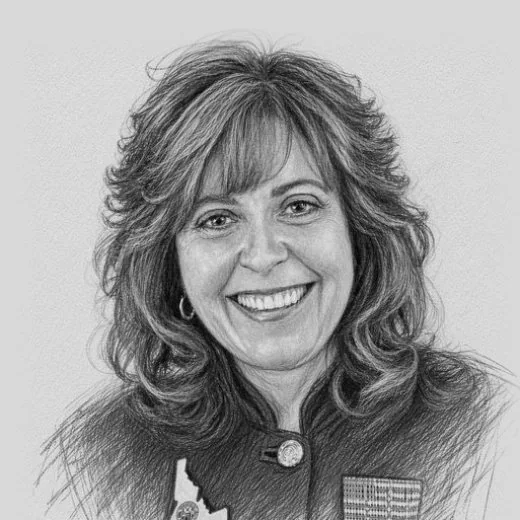
MoonChairman

PurdyFirst Vice Chair
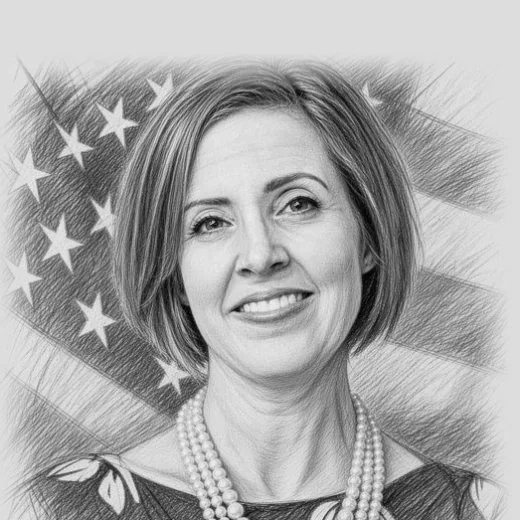
YoungSecond Vice Chair

MattareSecretary

EatonTreasurer

SmithNatl. Cmmteman
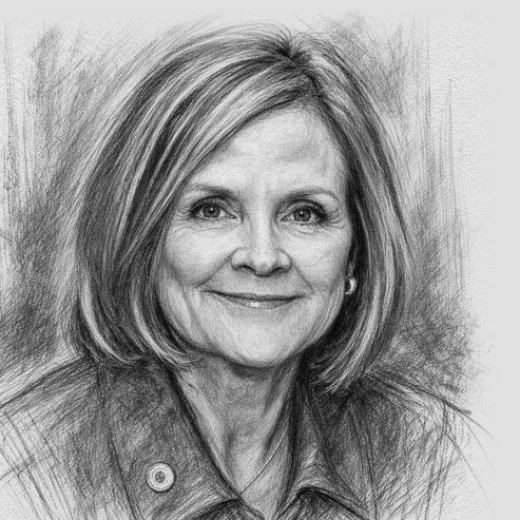
KeenNatl. Cmmtewoman
The two-year clock
Until polls open · Primary, May 16, 2028
- Now
Affiliate Republican. Attend your county meeting. Ask the chairman about vacant precincts.
- Jan 8–9, 2027
State Central Committee Winter Meeting, at Harvest Church in Meridian. Details and registration are at idgop.org.
- Summer 2027
State Central Committee Summer Meeting. Resolutions and rule changes are due 45 days before each meeting.
- Mid-Nov 2027
Last date to be registered in your precinct and still meet the six-month requirement.
- Dec 30, 2027
The Party's own deadline to be affiliated Republican for the 2028 primary. State law allows later changes, but do not count on it.
- Late winter 2028
Candidate filing with the county clerk. There is NO FEE to register as a candidate for precinct committeeman.
- May 16, 2028
Primary election. Precinct committeemen elected.
- By May 26, 2028
County committees reorganize and elect officers and delegates. Districts by May 27.
- June 2028
Regions elect chairmen. State Convention elects Party officers and adopts the Platform.
How to become a precinct committeeman.
There aren't many requirements for being a Precinct Committeeman:
- Be 18 years old
- Be a U.S. Citizen
- Be registered to vote in your precinct 6 months before the election
There is no cost to file to run. You just have to fill out a declaration of candidacy at your local elections office, and file it with your county clerk.
- Find your precinct. The Secretary of State's voter lookup shows your precinct, your polling place and your party affiliation in one step. Then find that precinct in the roster in Chapter IV and see who holds it and how they won it.
Look up my precinct at VoteIdaho → - Affiliate Republican, now. Under Party rules an elector must be affiliated by December 30 to vote in the following year's Republican primary, and anyone leaving another party waits twelve months. Newly qualified electors are exempt, so anyone who has just turned eighteen can affiliate and vote right away. The Secretary of State has said his office cannot enforce the Party's deadline, and state law lets a voter change parties until the middle of March before a primary.1 Do not cut it that close. A committee is more likely to welcome somebody who has been a registered Republican for a while.
- Ask about vacancies today. You do not have to wait for 2028. A seat falls vacant when a PC resigns, moves, dies, or misses four regular meetings in a row without an accepted excuse, and 112 precincts had no candidate on the 2026 ballot at all. The county committee fills vacancies by its own vote at a regular meeting, with two weeks' notice.2 Some of those seats have been filled since May, so call the county chairman and find out. Then attend a meeting and ask to be nominated.
- Show up first. Go to your county committee's monthly meeting as a guest. Learn who the members are and how they vote. Volunteer for a committee. Members elect people they have seen work.
- File for 2028. The filing window opens in late winter of the election year; confirm the dates with your county clerk or the Secretary of State. The primary is Tuesday, May 16, 2028, so you must be registered in your precinct by mid-November 2027.
- Knock every Republican door. A typical precinct holds several hundred Republican households and a PC race is decided by one or two hundred votes. No mailer beats a neighbor on the porch. Carry a one-page card with your name, your precinct number and what you will vote for.
- Vote at reorganization. Within ten days of the primary you will vote for county officers and convention delegates, and within eleven days for district officers. Proxies are not allowed at these meetings. Be in the room.
Keeping grassroots control is up to YOU
Control of a Central Committee can be won or lost at every primary, and constant elections every two years can be an incredibly destabilizing factor. The way to hold a seat through all of that is to be a committeeman your neighbors would not think of replacing. Keep a list of every Republican household in the precinct and walk it twice a year. Tell people what the committee voted on and how you voted. Register new voters, be active on social media, and start a Substack. Be available and engaged, and listen to what your neighbors have to say. If you win a precinct seat, YOU are their voice on the committee and in the Party.
Build the things around the Party that outlast an election: a men's group, a parish, a grange, a youth league, a shared workday. A PC who is known on every street cannot be unseated by a postcard campaign paid for from Boise.
How the meetings work.
The Party runs on Robert's Rules of Order Newly Revised wherever state law and Party rules are silent.1 The man who knows the rules controls the meeting. Learn these and you will lose fewer votes you should have won.
Buy a copy of Robert's Rules →Affiliate link. The Idaho Precinct Project earns a small commission if you buy through it.
Robert's Rules are both your sword and your shield in these meetings. Politics is war by other means, and when central committees are deeply divided, they more often resemble a knife fight than a civilized meeting. It's effectively gang warfare. But when you learn the rules, you can turn an ugly situation into something at least politically useful.
| To do this | Say | Second? | Debate? | Amend? | Vote |
|---|---|---|---|---|---|
| Main motion | "I move that…" | Yes | Yes | Yes | Majority |
| Amend | "I move to amend by…" | Yes | Yes | Yes | Majority |
| Refer to committee | "I move to refer this to…" | Yes | Yes | Yes | Majority |
| Postpone to a set time | "I move to postpone until…" | Yes | Yes | Yes | Majority |
| Close debate | "I move the previous question." | Yes | No | No | Two thirds |
| Lay on the table | "I move to lay it on the table." | Yes | No | No | Majority |
| Suspend the rules | "I move to suspend the rules to…" | Yes | No | No | Two thirds |
| Point of order | "Point of order." | No | No | No | Chair rules |
| Appeal the chair | "I appeal from the decision of the chair." | Yes | Yes | No | Majority overturns |
| Division | "Division!" (demands a rising vote) | No | No | No | On demand |
| Parliamentary inquiry | "Parliamentary inquiry." | No | No | No | Chair answers |
| Reconsider | "I move to reconsider…" (from the winning side) | Yes | Yes | No | Majority |
| Adjourn | "I move to adjourn." | Yes | No | No | Majority |
Quorum, proxies and ballots
A county or district committee needs 51% of its PCs present unless its bylaws say otherwise.2 Proxies must be in writing, signed and dated, and no member may carry more than three. Proxies never count toward quorum, and they are barred for the elections that matter most: officers, convention delegates and nominees for vacancies. Contested elections at every level are by secret ballot.3 At state meetings you will show photo identification to receive credentials.
How a resolution becomes the Party's position
- Pass it at home. Unless it comes from the State Chairman or the Executive Committee, a resolution must first be approved by a county, district or region committee. Each may send two per state meeting.4
- File it 45 days out. The standing Resolutions Committee must receive it 45 days before the State Central Committee meets. Late filings need a two-thirds vote of the committee to be heard.
- Defend it in committee. Two members from each region sit on the committee. The sponsor gets five minutes; so does the opposition. A majority sends it to the floor.
- Carry it on the floor. Five minutes of debate per side. If it failed in committee with at least one third in favor, it may still reach the floor as a minority report.
- Use it. A passed resolution stands for two years and is posted on the Party website. The State Chairman's legislative liaisons are charged with turning resolutions that call for legislation into bills.
Rule changes follow the same path through the standing Rules Committee and pass the State Central Committee by simple majority.
What a resolution does
A resolution is the Party speaking in its own name. It does not make law and it cannot bind a legislator, but it puts the Republican Party of Idaho on the record for two years on a question its own members chose to answer. Candidates get measured against it, and legislators who ignore it get asked about it at the next Lincoln Day dinner. Apart from the few that the State Chairman or the Executive Committee brings, every resolution has to start in a county, district or region committee, so the people who decide what the Party says are precinct committeemen.
Platform planks are broad. A resolution is specific and dated, which makes the fights over resolutions the best picture there is of who holds the Party.
June 2026: the floor says Idaho First
Until 2026, every state convention in recent memory had passed a resolution titled “Idaho's Unequivocal Support for Israel.” The 2022 version was sponsored by Mark Fuller of Legislative District 33, and it asked Idaho's congressional delegation to provide financial and military support to a foreign state. It passed again in 2024. It was the kind of resolution that used to go through on a voice vote while delegates looked for coffee.
In June 2026 it came back as Resolution 2026-11, cleared the Resolutions Committee, and reached the floor. This time something unexpected happened. The delegates struck it from the resolutions packet, effectively erasing it.5 The argument on the floor was about Idaho.6 The United States had gone to war with Iran that February. Nobody in Idaho had voted for it, and the President had promised there would be no new wars.7 The Party's own Platform already says American troops are not the world's policemen,8 and the delegates decided that a state party had no business pledging its members, unequivocally, to the wars of another country.
The same week, the National Committeeman published a letter backing Fuller for State Chairman against Dorothy Moon. Moon won on the first ballot.
Five months later the rest of the country caught up. In November about six in ten voters told the AP's pollsters that going to war with Iran had been the wrong decision, and Republicans lost both houses of Congress.9 The delegates on that convention floor, every one of them sent there by precinct committeemen, had said it first.
If you want the Party to say something, write it, pass it in your county, and file it 45 days before the next State Central Committee meeting. If you want the Party to stop saying something, show up and vote.
- Rules of the Idaho Republican Party, Article X (as amended June 20, 2026). ↑
- County and legislative district bylaws, archived by the state party under Article XV. ↑
- Rules of the Idaho Republican Party, Article IV, Section 12 and Article VII, Section 9 (quorum and proxies at county and district meetings); Article XXI (Proxy Voting); Article IV, Section 1 (secret ballot) (as amended June 20, 2026). ↑
- Rules of the Idaho Republican Party, Article I, Section 16(B) (Resolutions Committee) (as amended June 20, 2026). ↑
- Dave Reilly on X, from the convention floor, June 20, 2026. Resolution 2026-11 does not appear in the 2026 Convention Resolutions as adopted. ↑
- Dave Reilly on X, on the floor debate, June 20, 2026. ↑
- BBC News (video): Trump and the “no new wars” promise. ↑
- 2026–28 Idaho Republican Party Platform, Article XVII, Section 7 (Command of Forces) and Section 8 (Non-Interventionism). ↑
- AP Voter Poll, November 2026, as reported by Outlook, “US Midterms 2026: 6 In 10 Voters Oppose Iran War”. Chapter XI has more on the election. ↑
Rating and Vetting: choose the nominee before the primary.
The most effective tool a county committee owns was built in Kootenai County. Under the process written into its bylaws, the Kootenai County Republican Central Committee (KCRCC) examines every candidate who asks for its support, votes by secret ballot, and tells Republican voters before the primary which candidates hold to the Platform.
Watch on YouTubeRating and Vetting, explainedyoutu.be/abZkbwbKsUwThe authority is in the state rules.1 Article IX lets a County Central Committee endorse Republican candidates for any office on the ballot in that county, a Legislative District Committee endorse for the legislature, and the State Central Committee endorse for statewide and federal office, in the primary as well as the general. The endorsement must be by majority vote and open to every eligible candidate for the office. The only race a committee may not endorse in is precinct committeeman.
The Kootenai process2
- Questionnaire. Every candidate is invited to answer in writing. The questions and answers are published.
- Interview. The Rating and Vetting Committee interviews each candidate in person.
- Forum. Candidates face the committee members and the public and take questions.
- Due diligence. Subcommittees check records, backgrounds and past votes and report their findings.
- Debate. The full committee meets to discuss the reports.
- Secret ballot. Every PC rates the candidates on paper. Ballots are counted in full view. A candidate who earns more than half is recommended.
- Publish. The recommended list goes to every Republican household as a sample ballot.
The results are public. In the May 2022 primary the Idaho Tribune reported that all 25 candidates recommended by the KCRCC won in Kootenai County. Brent Regan, who came into the Party through the Tea Party movement, chaired the committee through those years and now chairs Region II. The committee's seats are fought over because they matter: in 2026, 60 of Kootenai's 74 precinct races were contested, the highest share in the state.
An old boys' club depends on voters who cannot tell the candidates apart. Vetting takes that away.
Two more tools already in the rules
Integrity in Affiliation.3 Every Republican candidate for federal, statewide and legislative office is asked to sign a statement that he supports the Platform, or to list the planks he rejects. The answers are posted thirty days before the primary, and a refusal is announced.
Platform Enforcement.4 Twenty percent of a committee may petition to call an elected Republican before it to answer for votes against the Platform. A majority may censure. For a later violation, sixty percent may withdraw Party support and bar the official from using the Party's name on campaign material for five years.
The goal
A vetting committee in every county and district, and one at the State Central Committee for governor, the constitutional offices and Congress. That takes majorities on the committees, a bylaw amendment in each, and members willing to do the interviews. Idaho's next race for governor is in 2030, and the committees that could vet it will be elected in May 2028.
- Rules of the Idaho Republican Party, Article IX (Central Committee Endorsement), Sections 1 to 3 (as amended June 20, 2026). ↑
- Kootenai County Republican Central Committee Bylaws, as revised August 26, 2025, Article VII, Section 7.6 (Rating & Vetting Committee). ↑
- Rules of the Idaho Republican Party, Article XIII (Integrity in Affiliation) (as amended June 20, 2026). ↑
- Rules of the Idaho Republican Party, Article XX (Idaho Republican Party Platform Enforcement) (as amended June 20, 2026). ↑
From the primary to the precinct caucus.
The state-run primary lets anyone who checks a box choose the Party's nominees. The long-term aim of this movement is to return that choice to Republicans who show up: a caucus held in each precinct, run by the precinct committeeman and his neighbors, with paper ballots counted in front of the people who cast them.
The Party has already run one. When the Legislature eliminated the March presidential primary, the State Central Committee wrote its own rules and ran the Idaho Republican Presidential Caucus on March 2, 2024. Those rules are still on the books:1 the PC is the Caucus Captain for his precinct, voters sign a poll book and show photo identification, a tabulation committee is elected from the floor, and ballots are counted twice on site. It was not easy. In 2025 the State Central Committee adopted a resolution that cited the “logistical and financial challenges” of the caucus and asked the Legislature to bring back the March presidential primary.2 Anyone who wants a caucus for state and local offices has to be ready to answer that.
Extending the caucus to state and local nominations is harder. Two resolutions calling for the Party to choose precinct committeemen and nominees by caucus were offered at the June 2026 convention and both failed in committee. Nominations for state office are governed by Idaho Code,3 so a full change needs an act of the Legislature or a court ruling on the Party's right of association, as well as a Party rule.
The path
- Win the county and district committees, so that the Resolutions and Rules committees are seated with members who want it.
- Pass the resolution at home and bring it back every meeting until it clears committee. A one-third vote in committee earns a minority report on the floor.
- Make vetted endorsements the working substitute in the meantime. A committee endorsement before the primary does most of what a caucus would do.
- Through those endorsements, elect legislators who will amend the election code.
- Rules of the Idaho Republican Party, Article V (The Idaho Republican Presidential Caucus) (as amended June 20, 2026). ↑
- Idaho Republican State Central Committee, Resolution 2025-34, “Resolution to Restore the Idaho State Presidential Primary in March,” adopted with amendments at the 2025 Summer Meeting. ↑
- Idaho Code, Title 34, Chapter 7 (Primary Elections). ↑
The same fight, since 1892.
By now you know what the job is and how to get it. Before you go and do it, you need some situational awareness about what is happening in Idaho today, and you need to spend some time with our history. You know the old adage: “Those who cannot remember the past are condemned to repeat it.” We don't want to repeat past failures, and we don't want you flying blind.
For years, the people elected to govern Idaho as Republicans have changed once they got into office and governed like Democrats. The Party, which is supposed to hold these officials to account, has been filled with people who do not want to exercise that power. And when Idahoans took one county committee back, the establishment answered with money, a radio campaign and the word “extremist.” The mine owners did the same thing to the Coeur d'Alene unions in 1892, and that story is at the end of this chapter.
A Republican governor who governs like a Democrat.

Brad Little has been elected governor three times as a Republican, most recently in November 2026 with 57% of the vote.1 This is his record on the things that decide whether Idaho stays Idaho.
In March 2020 he ordered every Idahoan to stay home and closed every business he decided was not essential. He did it by proclamation, with the Legislature out of session, and the order ran for thirty-six days.2 Governors of Idaho had suspended ordinary life by proclamation before, in 1892 and in 1899, and that history starts at the end of this chapter.
In 2023 the Legislature passed the Children's School and Library Protection Act, which let parents sue a school or public library that handed obscene material to a minor. The governor vetoed it, and the override failed by one vote. That summer the Idaho Republican State Central Committee voted no confidence in Brad Little and in the fourteen “Republicans” who sustained his veto.3
In 2025 the Legislature barred unofficial flags from government buildings. The Mayor of Boise, Lauren McLean, answered by declaring the Pride flag an official city flag, and it kept flying over City Hall for a year while the governor's office did nothing. The flag came down only after the Legislature came back in 2026 and attached a fine of $2,000 a day, and the city lit the building in trans colors that same night.4
St. Luke's, the state's largest hospital system, ran a children's clinic in Boise that advertised puberty blockers, cross-sex hormones and surgery for minors.5 The Legislature banned those procedures for minors in 2023. The governor signed the bill late on a Tuesday night that April, and he attached a letter warning lawmakers to “take great caution” before letting government “interfere with loving parents.”6
In 2026 an initiative to legalize abortion up to viability reached the November ballot with more than 110,000 signatures, and its opponents said it was being paid for by out-of-state billionaires.7 The state Party campaigned against it,8 and on November 3 it lost, 56% to 44%. The governor, who was on the same ballot, spent the fall avoiding debates. At the League of Women Voters forum in Boise his chair sat empty.9
Thousands of the people reading this came to Idaho from California, Washington and Oregon after 2020, and they did not move for the weather. They left behind shuttered churches, Antifa in the streets, schools that lied to them about their own children, and a political class that called them the problem. They arrived in a state that advertises itself as one of the reddest in the country and found a “conservative” governor who sits out the fights that matter most to them.
Why he is still there.
A governor gets replaced when a party recruits a challenger, vets him, funds him and turns out the vote for him, county by county. In Idaho that party is built from 981 precinct seats, and for most of the last twenty years those seats have been held by people who had no intention of doing any of that.
Most of those seats were never taken from anyone. In May 2026, 70% of them were won without an opponent or left with no candidate at all, and Chapter II has the arithmetic. The establishment never had to capture the Party, because it was usually the only one in the room. The people in the room call themselves moderates. Some belong to the old boys' club of lobbyists and retired officeholders who like the Party as a dinner society. Some are not Republicans at all. Since Idaho closed its Republican primary in 2012, left-leaning voters have re-registered as Republicans to vote for the weaker candidate, a practice the Idaho Tribune documented in 2022. In 2026, about thirty percent of the 110,000 Idahoans who signed the abortion initiative petition were registered Republicans, and two of them were sitting precinct committeemen in Kootenai County.10
A Party run that way was never going to hold a Republican governor to the Platform, and it has not.
Four campaigns that failed.
In two election cycles Brad Little has been challenged twice in the Republican primary and twice by an independent in November. None of those campaigns came through the Party, and all four failed.
2022. Lieutenant Governor Janice McGeachin ran against him in the primary with Donald Trump's endorsement and lost, 148,831 to 90,854, with Ed Humphreys and five other candidates taking another 42,000 votes. Ammon Bundy pulled out of that primary in February and ran as an independent in November. He drew 101,835 votes, 17% of the total, which was the best showing by a candidate outside the two major parties since 1926, and he finished ahead of the Democrat in 34 of the 44 counties. Little still won with 60%.11
2026. Trump endorsed Little a year before the primary, and by spring Little had raised nearly $2 million. In May David Leroy, a former attorney general and lieutenant governor, told Idaho Education News that the right did not have “a candidate of stature” to run against him.12 The candidate who did step forward was Mark Fitzpatrick, a former police officer who owns the Old State Saloon. He had raised less than $200,000 by the end of March, and he took 28.7% of the primary, 68,546 votes to Little's 140,778, with six other candidates splitting another 30,000.13 In November the Democrat, Terri Pickens, got 32%. John Stegner, a former justice of the Idaho Supreme Court, ran as an independent, raised more than half a million dollars, and got less than 8%.
In those two primaries more than 230,000 votes went to somebody other than the sitting governor of the voters' own party, and in between another 100,000 Idahoans voted for an independent over him. Those campaigns had plenty of voters and none of the things a party is supposed to provide. A challenger who starts in January has no roster of volunteers, nobody to vouch for him, no endorsement, no county committees walking precincts, and no way to tell a quarter of a million primary voters which candidate holds to the Platform. The incumbent gets all of that by default as long as the committees are in friendly hands. Chapter VIII explains the remedy, which is a committee that rates and vets every candidate before the primary and mails the result to every Republican household.
North Idaho: what happens when you win.
Kootenai County proves that the seats can be taken, and it also shows what comes afterward. Under Chairman Brent Regan, the Kootenai County Republican Central Committee (KCRCC) did what this website describes. It filled its precincts and wrote Rating and Vetting into its bylaws. It put every candidate through a written questionnaire and an interview, voted by secret ballot, and mailed the results to every Republican household. It endorsed in school board, library and college trustee races that the establishment had always treated as its private property. In the May 2022 primary, all 25 of the candidates it recommended finished first in Kootenai County.
The establishment struck back. A former lieutenant governor, Jack Riggs, and a former committeewoman, Christa Hazel, founded a political action committee called North Idaho Republicans.14 Its radio ads called the KCRCC “a breeding ground for extremism,” and, as Regan wrote at the time, its allies in the press called the committee's members white nationalists and domestic terrorists.15 The Kootenai Freedom Caucus, the grassroots bloc on the committee, published a list of who was behind the effort: a Women for Biden organizer, a former Pride Alliance board member, a retired lobbyist for Pfizer and Monsanto, and Never Trumpers running as Republicans.16
In May 2024 North Idaho Republicans ran candidates for nearly all 73 precinct seats, 29 of them former elected officials, and won 30, up from two.17 In May 2026 they came back and took 33 of 74. The Freedom Caucus held 37, four independents held the balance, and Brent Regan lost his own precinct by fourteen votes, 286 to 272, though he is still listed as chairman of Region II.18 Nine days later the committee elected Ron Jacobson, a retired banker and former mayor of Post Falls, as its chairman, 63 to 9, on a promise to stop the infighting.19 Whether Rating and Vetting survives that promise is something the next two years will show.
38 of 74 seats is a majority.
Sources: Spokesman-Review, May 22, 2024 and May 20, 2026. “Grassroots” is the KCRCC slate in 2024 and the Kootenai Freedom Caucus slate in 2026; 2022 is the starting point North Idaho Republicans described, two seats.
North Idaho Republicans spent three years, two election cycles, a radio campaign and 29 former officeholders on seats that are won with a couple hundred votes apiece. The establishment understands the precinct strategy as well as anyone does, and it is using that strategy against the grassroots.
1892: the same fight, the same playbook.


Idaho was two years old. The silver mines of the Coeur d'Alenes were the richest in the country, and the men who worked them had organized, camp by camp, into miners' unions at Wardner, Gem, Burke and Mullan. The men who ran those unions were Irish and Catholic. Edward Boyce of the Wardner union was born in County Donegal, came to the district in 1888, and served as that union's corresponding secretary.20 In 1892 the owners, organized as the Mine Owners' Association, cut the underground wage by fifty cents a day and added an hour to the shift. The miners struck for $3.50 a day for every man underground, skilled or not.21 A year earlier, in Rerum Novarum, Pope Leo XIII had written that a workingman is owed a wage that can support a family and has the right to organize to get it. The Coeur d'Alene unions asked for nothing more than that.22
The owners did three things. They shipped in replacement workers from Michigan, using job advertisements that never mentioned a strike. They hired the Pinkerton and Thiel detective agencies to infiltrate the unions and brand the members as anarchists. And when shooting broke out at the Frisco mill on July 11, they got the governor, Norman Willey, to declare martial law, bring in federal troops, and lock about six hundred miners in bullpens without charges or hearings. Boyce was arrested with them and served six months in the Ada County jail for contempt of court. He came out blacklisted.23 Eighteen union leaders were convicted, and the following year the U.S. Supreme Court reversed the conspiracy convictions of George Pettibone and his co-defendants.24
The Pinkerton inside the Gem union was Charlie Siringo. Under the name Charles Leon Allison he shoveled ore, joined the union and got himself elected recording secretary, so that every plan the miners made reached the mine owners within the week. Twenty-three years later he wrote a book called Two Evil Isms: Pinkertonism and Anarchism, in which he described what the agency did. It paid provocateurs, it framed defendants, and in Colorado it gave written instructions to rig a governor's re-election. The Pinkertons had him charged with criminal libel and got a court to impound the plates and every unsold copy.25
Here are the two stories side by side.
| 1892 | Today |
|---|---|
| The Mine Owners' Association | The donor class, and the lobby that works for it |
| Cut wages, lengthen the shift, import labor from Michigan | Hold wages down with imported visa labor while Idahoans are priced out of their own towns |
| Pinkerton and Thiel detectives inside the union hall | Crossover voters inside the Party, and a press that repeats what they say |
| “Anarchists,” “Molly Maguires” | “Extremists,” “white nationalists,” “domestic terrorists” |
| Martial law by proclamation, and a bullpen | A stay-home order by proclamation, and a fine |
| A governor who did what the owners asked | A governor who does what the donors ask |
| Miners who built a union, camp by camp | You |
The names are different now, but the method is the same. Men who profit from cheap labor and a quiet population have always been able to find a detective agency, a newspaper and a governor willing to call ordinary people dangerous for organizing. The miners answered the bullpen the following spring by building a federation of every mining camp in the West. Boyce went to the Legislature in 1894 as a Populist, and after that he became the federation's president.26 What became of him and of the federation is the second half of this story. It is told in Chapter XI, because it carries the warning that this whole website is built on.
What this chapter is for.
You were probably angry before you got here, so the point of this chapter is to aim that anger at the right target. The governor is where he is because the Party's precinct seats are held by people who want him just as he is, or by nobody at all. North Idaho shows that taking the seats works, and it shows how much work it takes to keep them. The miners of 1892 show what happens to a people who lose the institutions they built, which is that somebody else picks up the pieces, and he may not share their Faith.
The other side has shown what it is willing to do. Our answer is rightly ordered action, which means that we organize, vet, vote and take the seats, and we let the people who reach for the rifle explain themselves to a jury. It takes about 154 votes to win a seat, and your grandchildren will live in whichever Idaho the people who fill those seats decide to build.
- Boise State Public Radio, Idaho November 2026 midterm election results: Little 57%, Pickens 32%, Stegner under 8%; Proposition 1 failed with about 56% opposed. Unofficial until the state canvass. ↑
- World Population Review, lockdown by state: Idaho statewide stay-at-home order, March 25 to April 30, 2020. ↑
- Resolution 2023-43, Vote of No Confidence in Governor Brad Little and fourteen Representatives, adopted by the Idaho Republican State Central Committee, June 24, 2023. ↑
- Spokesman-Review, “Boise vows to take a stand against laws targeting Pride flags, trans people,” April 1, 2026. ↑
- Idaho Dispatch, “Hospital in Boise Offers ‘Gender Reassignment’ Surgery,” September 7, 2022. ↑
- KIVI, “Gov. Little signs House Bill 71, banning gender-affirming care for minors in Idaho,” April 5, 2023. ↑
- Spokesman-Review, “Abortion initiative fails in Idaho,” November 4, 2026. ↑
- Republican Party of Idaho, “The Truth About the Radical Abortion Initiative”. ↑
- Kevin Richert, Idaho Education News, “The governor’s race: Little lays low, while two opponents look for a breakthrough,” October 8, 2026. ↑
- Bonner County Daily Bee, “KCRCC addresses investigation into Prop 1 signers,” September 29, 2026. ↑
- “2022 Idaho gubernatorial election,” Wikipedia, from the Secretary of State’s certified canvass. ↑
- Kevin Richert, Idaho Education News, “Analysis: GOP politics and Little have changed since 2018. This election proves it,” May 7, 2026. ↑
- “2026 Idaho gubernatorial election,” Wikipedia; Idaho Secretary of State, May 19, 2026 primary results. ↑
- Spokesman-Review, “Traditional Republicans flood May ballot for control of Kootenai County GOP,” May 12, 2024. ↑
- Brent Regan, Idaho Tribune, “Ad Hominem Ad Nauseam,” July 21, 2023. ↑
- Kootenai Freedom Caucus, “Who Is Attacking Us”. ↑
- Spokesman-Review, “Traditional Republicans fail to win majority of seats needed to control Kootenai County Republican Central Committee,” May 22, 2024. ↑
- Spokesman-Review, “Kootenai County GOP chairman Brent Regan loses precinct committee race,” May 20, 2026. ↑
- Spokane Public Radio, “Kootenai County GOP elects former Post Falls mayor as chair in effort to halt infighting,” May 29, 2026. ↑
- “Ed Boyce,” Wikipedia: born November 8, 1862, County Donegal; joined the Wardner Miners’ Union in 1888 and served as corresponding secretary. ↑
- “1892 Coeur d’Alene labor strike,” Wikipedia, and William J. Gaboury, Dissension in the Rockies: A History of Idaho Populism (1988). ↑
- Leo XIII, Rerum Novarum, May 15, 1891, paragraphs 45 and 49–57. ↑
- “Ed Boyce,” Wikipedia: arrested for violating the federal injunction, six months in the Ada County Jail for contempt, released 1893 and blacklisted. ↑
- Pettibone v. United States, 148 U.S. 197 (1893). ↑
- “Charlie Siringo,” Wikipedia; Charles A. Siringo, Two Evil Isms: Pinkertonism and Anarchism (1915). ↑
- “Ed Boyce,” Wikipedia: elected to the Idaho Senate from Shoshone County as a Populist in 1894; president of the Western Federation of Miners, 1896–1902. ↑
History repeats itself.
Chapter X ended in 1893, with the miners of the Coeur d'Alenes out of the bullpen and building a federation of their own. The story does not end there, and the way it does end is a warning to us.


The men who had been in that bullpen were Irish, Italian and Slavic, and a great many of them, like the men who led their unions, were Catholic. Their unions were built in the parish as much as in the union hall, and they were not asking for a revolution. They asked for a living wage, a shorter day, a mine that did not kill them, and the right to be treated like men. They cared about money too. The silver they dug had been money until Congress demonetized it in 1873, and they wanted a dollar that could not be managed from a bank in New York. Idaho's silver counties went for Free Silver and sent Populists to Boise while the eastern money called them cranks.1 Faith, Family and Freedom were what those men had, long before anybody made a slogan out of the words, and the Mine Owners' Association was taking all three away from them.
What happened to them has happened to rooted people ever since, and it came in three parts. The first was a label. In Pennsylvania in the 1870s, the railroad and coal baron Franklin Gowen had hired the Pinkertons to send an informant named James McParland into the Irish Catholic mining towns of the anthracite country. McParland came back with a conspiracy called the Molly Maguires, and on his testimony, with Gowen himself acting as prosecutor, twenty Irishmen were hanged between 1877 and 1879. Historians still argue about how much of the Mollies existed outside McParland's notebook. The hangings did their work either way, because after them any Irish Catholic who asked for better pay could be called a Molly.2
The second was another label, “anarchist,” and this one could be used on anybody. The cities of the 1880s had real anarchists. The Haymarket bomb in Chicago in 1886 killed seven policemen, and it handed every employer in America a word to use against any workingman who organized.3 The Coeur d'Alene miners were not anarchists, but the Pinkertons called them that anyway, because the word worked.


The third part is the one the labor histories skip. Once martial law had broken the Catholic unions, what grew back in their place did not stay Catholic. The Western Federation of Miners was founded in Butte in May 1893 as a direct answer to the bullpen, and within a decade it had been captured by Marxist Revolutionaries. Edward Boyce, the Wardner secretary who had done six months in the Ada County jail, was its president from 1896 to 1902, and the bullpen had radicalized him. In 1897 he told the locals to form rifle clubs. In 1898 he pulled the Federation out of the American Federation of Labor. In 1901 he carried the vote that declared it for socialism, and with that vote he left behind the Faith of the men he had led in 1892.4 He could not plead ignorance. Ten years earlier, in Rerum Novarum, Leo XIII had defended the living wage and the workingman's right to organize, and in the same letter he had condemned socialism outright as a remedy that would hurt the worker first.5 What the miners demanded in 1892 was the Pope's program, and what the Federation adopted in 1901 was the thing he had warned them against. Boyce quit the next year and ended his days as a hotel owner in Portland, and he left the Federation to harder men.
In 1905 the Federation's leaders founded the Industrial Workers of the World, with an Idaho silver miner named Big Bill Haywood in the chair. That December, former Governor Frank Steunenberg, the man who had sent the troops into the Coeur d'Alenes in 1899, was blown up at his own gate in Caldwell. Harry Orchard, the man who confessed to the bombing, named Haywood, and the Pinkerton who took the confession was James McParland, the same man, thirty years older. Haywood walked free from his trial in Boise in 1907, but he was later convicted of violating the Espionage Act. He skipped bail in 1921 and left the country, fleeing to Bolshevik Russia, where he went on to die in Moscow. Half of his ashes are embedded in the Kremlin wall.6
The Catholic miners of 1892 had wanted a wage and a church and a family. What they got, after the owners and the Pinkertons were done with them, was a choice between The Company and the Bolsheviks. Once the Catholic unions were broken, the best-organized men left in the camps were the socialists, and by 1901 the Federation belonged to the Revolution.
Steunenberg deserves a closer look, because he was no saint, and Idaho will meet his type again. The miners had put him in office. He was elected governor in 1896 as a Democratic-Populist fusion candidate with the unions behind him, the first non-Republican to hold the job, and he was re-elected in 1898.7 In April 1899 a Western Federation crowd dynamited the Bunker Hill and Sullivan concentrator at Wardner. Steunenberg declared martial law and asked President McKinley for federal troops, and this time a thousand men went into the bullpen, which was a hay barn and a row of boxcars behind six feet of barbed wire. Three of them died there. The Mine Owners' Association handed him $25,000 for the prosecutions, and under the permit system that followed, no union man could work in the district at all.8 The miners had elected him, and he sold them out to big business. Six years later the bomb went off at his gate, and the men who set it gave the owners the one thing they had always wanted, which was a union with a murderer's name on it.
Every piece of that pattern is back. We have the label again, and the informant, and the imported labor, and the politician who takes the people's votes and then does the owners' bidding. The people in the middle, who want a wage, a church and a family, are being squeezed from both sides again. They face the same question the miners faced when they came out of the bullpen, which is who will be organized enough to pick up the pieces once the old institutions are broken. Last time it was the Revolution. Chapter I described two choices, and the miners' story shows what the second one cost.
What happened to us.
Most of us lived through the next part of this story ourselves. The Tea Party woke a lot of Idahoans up to Sound Money, fiscal restraint, and the plain fact that a country that will not defend its borders, its language, or its culture will not stay a country. Trump in 2016 showed that the donor class and the consultant class did not own the party. Then came the lockdowns. Businesses were shuttered, people who refused the new dogmas were treated like heretics, and some were harassed by their own state police for trying to stay open. Our own governor ordered one for Idaho. It was the third time a governor of this state had suspended ordinary law by proclamation, after 1892 and 1899. Both of those times the excuse was an emergency, and both times the result was a county where nobody could work, trade or assemble without permission. In 2020 the penalty was a fine instead of a barbed-wire fence, but nobody asked the people that time either. Then we watched the places we had left behind go much further. California, Portland, and Seattle made Idaho's version look mild, and people fled those places in numbers large enough to make Idaho the fastest-growing state in the country.9
Each state's first statewide order, as dated by the source. Wyoming issued none. World Population Review, lockdown by state.
What they were fleeing was anarcho-tyranny, where criminals run the streets while ordinary people get fined for opening a shop. Minneapolis burned. Protesters declared an “autonomous zone” in the middle of Seattle and held it for weeks. Portland was on fire night after night, and San Francisco's sidewalks filled up with needles and human waste. These were Democrat-run cities that had stopped functioning as cities and were surviving on federal money taken from the rest of the country. Anyone with eyes could see it, and a lot of eyes opened.
Sources: East Idaho News on the Census Bureau's 2023 state-to-state flows; Understand Idaho, net migration by year; Census Bureau, 2021 population estimates.
What opened them wider was watching Republicans get elected and then govern like the people they had campaigned against. After that nobody had to argue that there was a uniparty, because you could name the people in it.
Who actually holds power in this state.
Micron is one of the largest private employers in Idaho. In fiscal 2025 alone the federal government approved 499 H-1B visa petitions for the company, 206 of them for new hires, and Boise is the work site named on more of its visa applications than any other.10 In the fall of 2021 it told every one of its U.S. employees to get the Covid vaccine by November 20 or be let go, unless the company granted an exemption. Employees with religious objections said the “accommodation” they were offered was indefinite unpaid leave, and their group prepared 29 complaints to the federal Equal Employment Opportunity Commission.11 The same company has been awarded up to $6.165 billion in federal subsidies.12 St. Luke's, the state's largest hospital system, ran the children's gender clinic described in Chapter X.13
Institutions like these have no loyalty to the communities they sit in, and no real loyalty to the minorities whose causes they borrow. The causes are useful to them because they move public money, and when anyone objects, the answer is always a label: extremist, bigot, Nazi, white supremacist. For years Republican leadership flinched every time it heard one of those words, and the people using them were counting on that.
The left did not check out.
The people who moved here were not all the same. Some checked out the day the moving truck unloaded. Life is better than California, the paycheck clears, the ballot says Republican, and that is enough. There is not much we can do about them. The left, on the other hand, never checked out. Reclaim Idaho, the Democratic Socialists, and the rest of that network were already here, and they were not apathetic. Reclaim Idaho and its allies put ranked-choice voting on the ballot in 2024, and another coalition put abortion on the ballot in 2026. Both measures lost, but each one took a statewide signature drive and a statewide organization to get there, and that organization has not gone anywhere. In February 2025 Teresa Borrenpohl, a former Democratic candidate for the Legislature, was dragged out of a Republican town hall in Coeur d'Alene after she would not stop heckling the speakers. Within days, donors had sent her more than $320,000.14 On that side of politics, the people who make a scene get rewarded for it.
The longer campaign has been cultural, and it is older than the initiatives. Groups like the Wassmuth Center, the Kootenai County Task Force on Human Relations and the Human Rights Education Institute have spent decades attaching the word “extremist” to conservatives. When conservatives won a majority on the board of North Idaho College (NIC) in 2020, the Task Force and three other human-rights groups wrote to the college's accreditor and to the U.S. Justice Department asking for an investigation of the new board.15 In February 2023 the Kootenai County Democrats held a “Hijacking Democracy” symposium at a hotel in Post Falls.16 One of its panels was about North Idaho College. It was moderated by Dr. David Adler, and the panelists included Borrenpohl and Christie Wood, a Coeur d'Alene city councilwoman and former NIC trustee who serves on the Task Force. According to a recording of the session published by the Idaho Tribune, Adler asked where the conservative trustees worked and whether they owned businesses, and he raised the idea of a boycott. Wood answered that trustee Todd Banducci had his own business selling insurance and securities, and someone in the audience called out the name of the firm.17 Less than three months later a former NIC instructor walked into Banducci's office and threw a bucket of water and cleaning chemicals on him. The instructor pleaded guilty and was sentenced to three days in jail, a year of probation and restitution. Nobody has shown that he was at that symposium or ever heard the recording, and in court he blamed his own anger at Banducci. We bring it up because that was the atmosphere in North Idaho when it happened.18
Some of the Revolutionaries were born here. They grew up in Coeur d'Alene, left for Seattle, helped turn it into what it is now, and came home when the fight there was over. Revolutionaries who win one city move on to the next town that still disagrees, the way Robespierre kept going after he had won, and they keep going until they turn on each other or until somebody stops them.
The backlash has started.
Stopping it takes a counter-revolution, and one has already started inside the only vehicle that can carry it. The foreign press has been calling it a Republican civil war since 2021.19 Those of us who sit in the meetings would call it the base taking its own Party back. Since Dorothy Moon became chairman in 2022, the grassroots have stopped asking permission from the old boys' clubs and the billionaire networks. The Party has passed a resolution calling for the abolition of the FBI.20 It has put Defend the Guard into the Platform, so that Idaho troops are not shipped off to endless Middle Eastern wars that do not serve the people of this state.21 It has said that transgender ideology does not belong in our schools.
None of this was supposed to happen, and the years since have not been calm ones in Idaho. A former college instructor attacked a conservative trustee at his desk. In February 2026 a stolen ambulance loaded with gas cans was driven into a Department of Homeland Security office building in Boise.22 Conservatives in North Idaho also remember the Fourth of July in 2024, when the Sandpoint store of Cornel Rasor, who is now a Republican state representative, was destroyed in a fire that was charged as arson. No motive for that fire has ever been established.23
October 7, 2023, opened another door that the donor class wanted kept shut. Americans watched the war in Gaza in real time. They saw women and children shot, churches bombed and Christians spat on, and they started asking why their own government was paying for it. In June 2026 the Idaho Republican Party, with precinct committeemen in the room, rejected a resolution demanding unequivocal support for Israel and another blank check in bombs and aid.24 That vote was the first real proof that Zionist and foreign leverage over this Party can be beaten by an organized base. AIPAC can help buy a congressional seat. Thomas Massie lost his primary in May 2026 after AIPAC and groups aligned with the President spent at least $16 million against him, in the most expensive House primary on record.25 It is a great deal harder to buy 981 precinct races that are each decided by a couple hundred neighbors who know the candidate, although Chapter X shows that the other side will try.
November 2026: the voters said it too.
Five months after that convention the whole country voted, and it said what the delegates in Idaho had said. Democrats took both houses of Congress.26 The AP's survey of voters found that about six in ten thought going to war with Iran had been the wrong decision, and about two-thirds thought the President's policies had made the economy worse.27 In the Fox News poll, three out of four voters called the economy bad, and nearly seven in ten said the economic system favors the wealthy.28
Shares are rounded the way the pollsters reported them. The first two rows are from the Fox News Voter Poll, the last two from the AP Voter Poll as reported by the Associated Press and Outlook.
The Vice President wrote the next morning, “The reason we lost is the war.” In the same post he described what a pollster heard when he asked people who had voted for Trump in 2024 and then left the party what it would take to bring them back. Nearly all of the answers came down to four: “End the war,” “Focus on cost of living/inflation,” “Put America First,” and “Change our relationship to Israel.”29 When the President was asked whether he agreed about the war, he said, “I think it's largely true.”30
The country did not turn left that night. One Republican official called it “a punishment election rather than a political realignment,”31 and the numbers bear him out. In one Election Day poll, about a third of the people who voted for Trump in 2024 had stayed home, and fewer than one in ten had voted for a Democrat.32 Even among the people who did vote for Democratic candidates, about one in five told the AP they had a negative view of the Democratic Party.
Those voters were promised no new wars, lower prices, and a government that would put Americans first for a change. By the fall of 2026 they had a new war fought alongside a foreign country, and gasoline and groceries that cost more than before. They had voted for economic populism and American nationalism, and when the Republican Party did not deliver, they punished the Republican Party for it.
What the people want.
What the people want is not complicated, and the miners of 1892 would have recognized most of it. They want wages that can support a family and a house they can afford to buy. They want prices to stop climbing, and money that holds its value. They want immigration law enforced, starting with the companies that hire illegal labor and bring in visa workers to hold wages down. They want their sons kept out of wars that are fought for other countries. And they want the people they elect to do what they promised.
The names for that are economic populism and American nationalism, and Trump won on them twice. Idaho's own delegates voted for them in June of 2026. In November the country punished the party that had promised those things and then walked away from them.
In Idaho the Republican label held, but it is wearing thin. Brad Little's margin over the Democrat fell from 40 points to about 25, Democrats gained six seats in the Legislature, and Congressman Mike Simpson was re-elected in the Second District with less than 52% of the vote.33 If the Party keeps running on the label and governing for the donors, it will keep losing ground here the same as everywhere else. If it delivers what its own voters keep asking for, it has nothing to fear from a blue wave.
The road ahead has been mapped.
Hilaire Belloc and Cecil Chesterton took the two-party racket apart back in 1911, in a book called The Party System. They showed that the leaders of two parties who claimed to be enemies were really one governing class, trading offices back and forth while the voters watched the show.34 And in 1793 the peasants of the Vendée, in the west of France, rose against the Revolution when it came for their priests and their sons, and for a time they beat back the strongest army of their age. We are not called to take up arms, and Chapter I explains why. What we do have to model ourselves after is their refusal to treat their Faith, their homes and their families as negotiable. We trust in Jesus Christ and we also organize, because the line attributed to St. Ignatius still governs the work: act as if everything depended on you, and trust as if everything depended on God.
The Republican Party is the only vehicle we have, and it is steered from 981 precinct seats. The people in those seats decide who leads the Party, who writes the Platform, which candidates the Party vouches for, and whether the resolutions that match how Idahoans actually live ever come to a vote. Knocking doors, volunteering and running for precinct committeeman are how a people that has been labeled, displaced and talked over takes the microphone back.
- William J. Gaboury, Dissension in the Rockies: A History of Idaho Populism (1988), on silver, the Populists and the mining counties. ↑
- “Molly Maguires,” Wikipedia; see also Kevin Kenny, Making Sense of the Molly Maguires (Oxford, 1998). ↑
- “Haymarket affair,” Wikipedia. ↑
- “Ed Boyce,” Wikipedia: WFM president 1896–1902; the 1897 call for rifle clubs; the 1898 break with the AFL; socialism adopted as WFM policy in 1901 at his urging; retired to Portland, where he ran the Portland Hotel Company. ↑
- Leo XIII, Rerum Novarum, May 15, 1891: paragraphs 4–15 reject socialism and the community of goods; 45 on the wage sufficient to support a frugal and well-behaved worker; 49–57 on workingmen’s associations. ↑
- “Western Federation of Miners,” Wikipedia; “Bill Haywood” and “Frank Steunenberg,” Wikipedia, on the 1905 assassination, the 1907 Boise acquittal, the 1918 Chicago Espionage Act conviction before Judge Landis (20 years), the March 1921 bail jump to Soviet Russia and Haywood’s 1928 death and burial in Moscow. ↑
- “Frank Steunenberg,” Wikipedia: elected 1896 as a Democratic-Populist fusion candidate with labor union support; re-elected 1898; his 1899 call for federal troops “was seen as a betrayal by Steunenberg’s union supporters”. ↑
- “Coeur d’Alene, Idaho labor confrontation of 1899,” Wikipedia: the April 29, 1899 dynamiting; federal troops of the 24th Infantry in May; roughly 1,000 men held, three deaths, last prisoners released December 1899; the $25,000 from the Mine Owners’ Association; the permit system. ↑
- U.S. Census Bureau, Vintage 2021 population estimates: Idaho the fastest-growing state, July 2020 to July 2021. ↑
- MyVisaJobs, Micron Technology, from USCIS and Department of Labor records: 499 H-1B petitions approved in fiscal 2025, 206 of them for new employment; Boise is named as the work site on more labor condition applications than any other city. ↑
- Idaho Business Review, “Religious objectors to file civil rights complaints against Micron,” March 4, 2022. Micron said it accommodated everyone who sought a religious accommodation through its process. ↑
- U.S. Department of Commerce, CHIPS incentives awarded to Micron for Idaho and New York, December 2024: up to $6.165 billion. ↑
- Idaho Dispatch, “Hospital in Boise Offers ‘Gender Reassignment’ Surgery,” September 7, 2022. ↑
- East Idaho News, “GoFundMe for woman dragged out of Idaho GOP meeting reaches over $320k,” February 2025. ↑
- Kootenai County Task Force on Human Relations and the Spokane, Bonner and Boundary county human rights task forces, letter of complaint to the Northwest Commission on Colleges and Universities and the U.S. Department of Justice, March 2021. ↑
- Coeur d’Alene Press, “Hijacking Democracy Symposium set for Feb. 25 in Post Falls,” February 8, 2023. ↑
- Idaho Tribune, “Secrets Revealed: Kootenai Dems Plot ‘Hardcore Measures’ Against NIC Trustees,” February 27, 2023. ↑
- Idaho Education News, “Former NIC instructor charged with battery involving trustee,” May 17, 2023; Idaho Tribune, on the sentencing. ↑
- The Guardian, June 7, 2021, on the split among Idaho Republicans over mask mandates. ↑
- Idaho Republican State Central Committee, Summer 2023 adopted resolutions, Challis, June 24, 2023. ↑
- 2026–28 Idaho Republican Party Platform, Article XVII, Section 4 (Idaho Army and Air National Guard): no combat deployment abroad without a congressional declaration of war. ↑
- Fox News, “Stolen ambulance allegedly driven into Idaho DHS office building in attempted arson attack,” February 2026. ↑
- Bonner County Daily Bee, “Woman charged in Army Surplus fire,” July 17, 2024: Rep. Cornel Rasor’s store, destroyed July 4, 2024; first-degree arson charged. ↑
- Idaho Republican Party, 2026 Convention Resolutions as adopted; Resolution 2026-11 was struck on the floor and does not appear. ↑
- NPR, “Kentucky Republican Rep. Thomas Massie loses primary race,” May 19, 2026; The New Arab, May 21, 2026, on the spending. ↑
- Yahoo News, from Associated Press race calls, updated November 15, 2026: Democrats flipped 45 Republican House seats and will hold at least 55 Senate seats. ↑
- AP Voter Poll, November 2026, as reported by the Associated Press and Outlook. The AP also found that about two in ten of the people who voted for Democratic candidates held a negative view of the Democratic Party. ↑
- Fox News Voter Poll, “2026 midterm elections usher in a blue wave as Democrats win control of Congress,” November 2026. ↑
- JD Vance on X, November 4, 2026, as quoted in The Post Millennial and 2paragraphs. ↑
- Arab News, “Trump says ‘largely true’ Iran war caused midterms loss after Vance comments,” November 2026. ↑
- Nathan Layne, Reuters, “Battle for young male voters intensifies after US midterm rebuke of Republicans,” November 16, 2026. ↑
- Newsweek, on a J.L. Partners poll of 1,000 registered voters taken on Election Day 2026: of Trump’s 2024 voters, 52% voted Republican, 35% did not vote and 8% voted Democratic. ↑
- Boise State Public Radio, Idaho November 2026 midterm election results; Sean Coletti, “Idaho’s 2026 Midterms: What the Results Tell Us,” November 13, 2026. Unofficial until the state canvass. ↑
- Hilaire Belloc and Cecil Chesterton, The Party System (London, 1911). ↑
Christ the King, and the government closest to home.
Politics is a means to an end. The end is a society in which a man can raise his family, own his land and his tools, worship God and save his soul without the state or the market standing in his way.
In 1925, in the encyclical Quas Primas, Pope Pius XI taught that Christ reigns over nations as well as over individual hearts, and that rulers and peoples owe Him public honor. A party committee is a small place to begin, but the principle is the same at every scale: those who hold office hold it under a higher law.
The Church's social teaching fills in the details. Subsidiarity, which Pius XI set out in Quadragesimo Anno (1931), holds that it is an injustice for a larger and higher body to take over what a smaller and lower one can do for itself. The family comes before the county, the county before the state, and the state before Washington. The precinct is Subsidiarity put into practice. It is the smallest unit of self-government in American life, a few hundred households who know one another.
Widespread ownership is the economic side of the same teaching. Leo XIII wrote in Rerum Novarum (1891) that the law should favor ownership and lead as many of the people as possible to become owners. G.K. Chesterton and Hilaire Belloc called the program Distributism, which means property, productive land and trade held by many families instead of by a few corporations or the state. Idaho's farms, shops and credit unions are what that looks like, and they are what consolidation, cheap imported labor and distant capital are taking apart.
The Common Good is how we measure all of it. It belongs to every Idahoan, including the ones who will never attend a meeting or care about any issue named in this handbook. A county committee that vets its candidates honestly is serving the widow on a fixed income and the young couple priced out of a house, whether or not they ever hear of it.
The voters who punished the Republican Party in 2026 were asking for economic populism and American nationalism, and those are good things to ask for. But the miners of the Coeur d'Alenes asked for much the same in 1892, and within ten years their movement belonged to the Marxists. What keeps a movement like ours rightly ordered is this teaching: a wage that can support a family, property in many hands, no war that is not just, and rulers who remember that they answer to God.
Start where you live. Learn the names on your street. Take the seat.
Read the primary documents.
Join the project.
We are connecting volunteers in all 44 counties. Tell us where you live and what you want to do, and we will put you in touch with others near you.
You can also write to us directly at info@idahoprecinctproject.com.
Help Us Educate And Mobilize Volunteers in Idaho
This website took a lot of time, and hundreds of dollars in tokens to build. Your contributions will go toward paying the volunteers who helped build this website and mobilizing volunteers across Idaho, and could help this project become a Non-Profit, and even an Institution.

Scan the code with any Bitcoin wallet, or copy the address.
bc1qkx6macmzrg3fql8mfr32zwp99xxlv3se78vetxCheck that the address in your wallet matches this one, character for character, before you send. Bitcoin payments cannot be reversed.
The Idaho Precinct Project is not a non-profit, and donations are not tax-deductible. This project is a grassroots effort to educate Idahoans about the realities of party politics, and since we are not advocating for or opposing any candidates for public office, we are not filing any paperwork with the Secretary of State. The Idaho Republican Party is a private organization that has the power to hold its own elections, choose its own leadership, and does not use any taxpayer funds. This project is not affiliated in any way with the Republican Party, and is an independent effort, undertaken by Idahoans who want to put America First.